
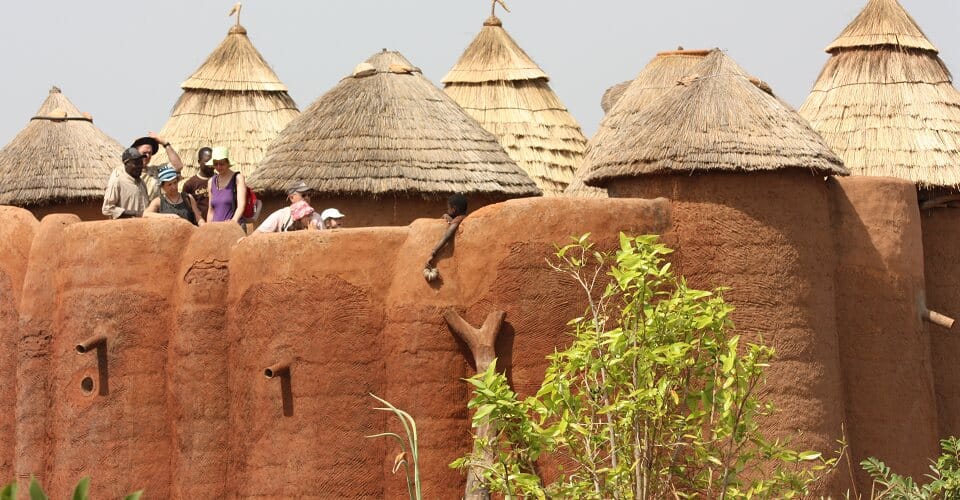
Togo is a narrow West African country wedged between Ghana and Benin, best known for the capital Lome’s beaches and markets, the UNESCO-listed Tata Somba mud-tower houses of the Koutammakou region in the north, and Vodun heritage that mirrors neighboring Benin. Togo is not yet part of Vialis Travel’s live trip lineup, our first Togo departures are planned for 2026, but the country is worth understanding now if you are mapping a West Africa trip that spans Ghana, Togo, and Benin.
- Lome, Togo’s capital, sits directly on the coast and functions as the country’s main entry point and cultural hub.
- The Koutammakou region’s Tata Somba houses, fortress-like mud towers built by the Batammariba people, are a UNESCO World Heritage Site in northern Togo.
- Togo requires a visa for U.S. citizens; visa on arrival has been discontinued, and travelers must apply for an e-visa in advance along with a Traveler Declaration Form.
- Yellow fever vaccination is mandatory for all travelers entering Togo regardless of origin country.
- Vialis Travel’s /togo-2026/ waitlist page tracks our launch timeline for guided Togo departures.
Jump to: Lome, the capital | Koutammakou and the Tata Somba houses | Visa and entry requirements | Is Togo safe to visit | Best time to visit | FAQ
Lome, the capital
Lome sits directly on the Gulf of Guinea coastline, close enough to the Ghana border that it is a natural add-on for travelers already in Accra or the Volta Region. The city is known for its lively Grand Marche (Central Market), Akodessewa Fetish Market (a market tied to traditional Vodun practice, similar in spirit to sites in Ouidah, Benin), and easy beach access within the city itself. Lome functions as the logical arrival point and first stop for most Togo itineraries, whether combined with Ghana to the west or Benin to the east.
Koutammakou and the Tata Somba houses
The Koutammakou region in northern Togo (and spilling into Benin) is home to the Batammariba people’s distinctive Tata Somba houses: two-story mud tower compounds built as much for defense as for daily living, with grain stores, sleeping quarters, and livestock areas integrated into a single fortress-like structure. UNESCO inscribed the Koutammakou landscape as a World Heritage Site in 2004, recognizing both the architecture and the broader cultural landscape, including the farming and ritual practices that still shape daily life there. A visit to Koutammakou is a full-day undertaking from Lome given the distance north, and it pairs naturally with a longer Togo or combined Togo-Benin itinerary rather than a short coastal-only trip.
Visa and entry requirements for Togo
Togo no longer offers visa on arrival for any nationality. U.S. citizens must apply for an e-visa online before travel, in addition to completing a Traveler Declaration Form, a separate health and security requirement. Key details:
- Passport validity: At least three months beyond your intended stay in Togo.
- Application timeline: Submit at least 5 business days before travel.
- Visa cost and duration: A single-entry tourist visa valid up to 15 days costs approximately 25,000 CFA francs (roughly 40 US dollars); longer multi-entry options are also available at higher cost.
- Yellow fever certificate: Mandatory for all travelers regardless of nationality or origin, no exceptions.
Apply well ahead of your trip date; do not assume same-day or arrival processing is available.
Is Togo safe to visit?
Togo generally carries a similar advisory profile to Ghana for the coastal south, with standard urban-safety precautions (avoid walking alone at night, use vetted transport, keep valuables secure) covering most of what a tourist itinerary in Lome and the immediate coast will encounter. As with Ghana, check the current U.S. State Department advisory before booking, since specific regional guidance can change. Our Ghana safety guide covers the same categories of risk (crime, regional restrictions, health precautions) that apply broadly across this part of West Africa.
Best time to visit Togo
Togo’s coastal south follows a similar seasonal pattern to coastal Ghana: a dry season roughly November through March that suits most travel, and a rainy season April through October with a short drier window in July and August. See our Ghana seasonal guide for the underlying weather pattern, since the two coastlines sit close enough together that the broad strokes transfer directly.
Join the Togo waitlist
Vialis Travel is developing guided Togo departures for 2026, covering Lome, the Koutammakou region, and connections into our existing Ghana and Benin trips. Join the waitlist on our Togo 2026 page to be notified as soon as booking opens, or browse our current Togo destination page for the latest status.
Food and culture in Togo
Togolese cuisine shares a lot of common ground with Ghana and Benin: staples like fufu, pate (a corn-based dough similar to Ghanaian banku), and grilled fish and chicken served with fiery pepper sauces are found throughout Lome’s restaurants and street-food stalls. French is Togo’s official language (a legacy of French colonial administration, unlike English-speaking Ghana), so a few basic French phrases go a long way, alongside widely spoken local languages including Ewe and Kabiye. Music and dance carry deep Vodun roots here too, particularly in the south, where ceremonial drumming traditions closely parallel what travelers encounter in Ouidah, Benin.
Crossing between Ghana and Togo
Togo shares a land border with Ghana at Aflao (Ghana side) and Kodjoviakope (Togo side), close to the coast and roughly 3 to 4 hours east of Accra by road, which makes an overland crossing realistic for travelers already touring Ghana’s Volta Region. The crossing itself is generally straightforward for travelers with visas and documentation already in order, though, as with any land border, expect some queuing and have all paperwork (passport, e-visa approval, Yellow Fever certificate) ready in hand rather than packed away. Benin sits on Togo’s eastern side, so a combined Ghana-Togo-Benin overland route is geographically possible for travelers with enough time, though most visitors currently fly between the three countries given limited guided infrastructure for the overland route.
Frequently asked questions
What is Togo known for?
Togo is known for Lome’s beaches and markets, the UNESCO-listed Tata Somba mud-tower houses of the Koutammakou region, and a Vodun cultural heritage closely related to neighboring Benin’s.
Does Togo have visa on arrival?
No. Togo discontinued visa on arrival for all nationalities. U.S. citizens must apply for an e-visa online in advance, along with a separate Traveler Declaration Form, at least 5 business days before travel.
Is Togo safe to visit?
Togo’s coastal south carries a similar risk profile to coastal Ghana, with standard urban-safety precautions covering most tourist activity. Check the current U.S. State Department advisory before booking, and travel with a vetted local operator for regional touring.
When will Vialis Travel offer Togo trips?
Vialis Travel is developing guided Togo departures for 2026. Join the waitlist at vialistravel.com/togo-2026/ to be notified when booking opens.